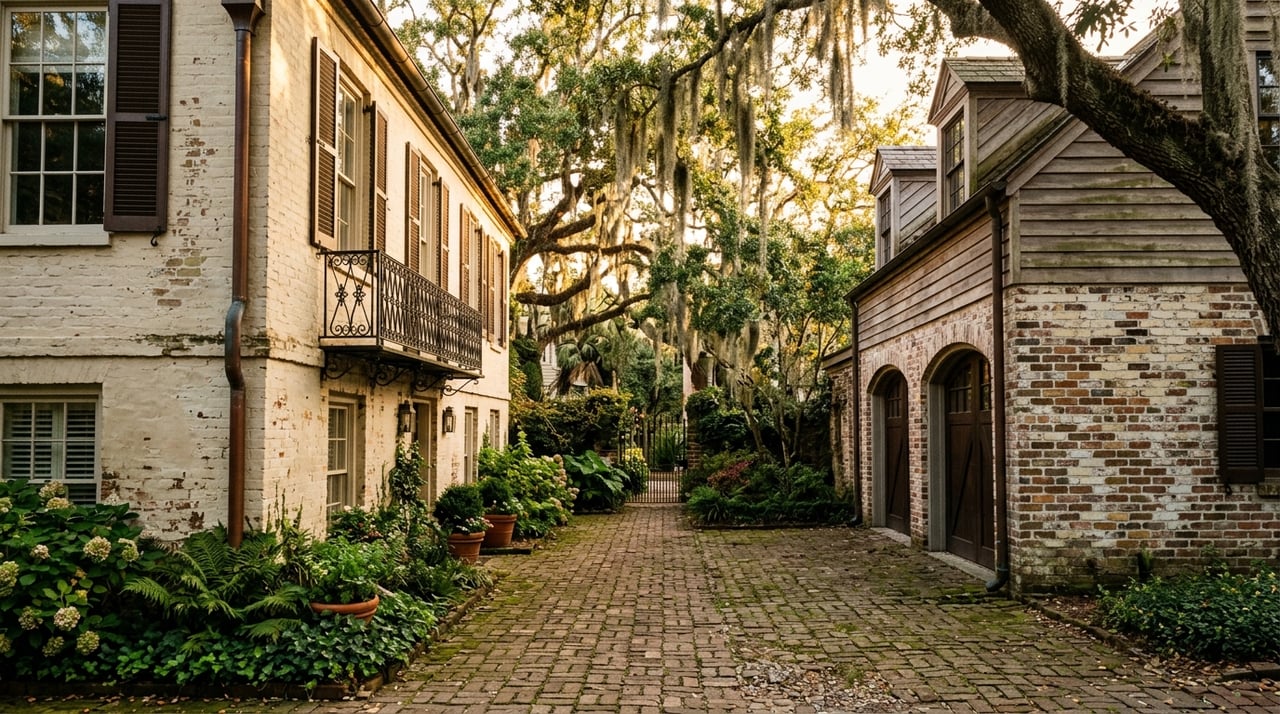
Thinking about buying in Savannah’s Historic District? It can be one of the most rewarding places to own a home, but it also comes with rules, research, and property details you do not want to discover after you go under contract. If you are drawn to the architecture, walkable streets, and sense of history, this guide will help you understand what makes this market different and what to verify before you buy. Let’s dive in.
Why Savannah’s Historic District Is Different
Savannah’s Historic District is not simply a collection of older homes. It sits within a National Historic Landmark District recognized for the Oglethorpe Town Plan and its architecturally significant buildings. That means you are buying into a protected historic environment, not just a home with character.
For you as a buyer, that can affect everything from future renovations to exterior maintenance. Changes to a property may involve more review than they would in a typical neighborhood. If you love the idea of owning a piece of Savannah’s history, it helps to go in with clear expectations.
Expect Urban Properties, Not Suburban Lots
One of the biggest mindset shifts for buyers is understanding the physical layout of the district. Many properties are on compact urban lots, and the area includes row-house blocks and buildings that have changed use over time. A home that began as a dwelling may now function differently, or a historic structure may have been adapted over the years.
That urban form also affects practical details. Downtown development standards can allow no setback requirement, and off-street parking reductions or exemptions may apply in certain areas. In plain terms, parking, driveways, garage access, and maneuvering space can be tighter than what you may be used to elsewhere in Georgia.
Research the Property’s History Before You Buy
In Savannah, historical research can be more than a fun extra. It can help you understand what you are actually buying. The city has deep documentation resources, including Historic Savannah Inventory Ward Notebooks and Sanborn maps that show building size, shape, construction, use, and later revisions over time.
These records can be helpful if you want to confirm how a property has changed through the years. They may also give you context about additions, altered layouts, or shifts in use. If a home’s story matters to you, Savannah offers unusual tools to help you piece it together.
Questions to ask about building history
- What year was the property built, and what records support that date?
- Have there been major additions or exterior changes over time?
- Do historic records match the home’s current layout and use?
- Are there archived photos, survey cards, or maps that help explain past changes?
Verify Renovations, Permits, and Historic Review
This is one of the most important steps in the buying process. In Savannah’s historic districts, certain material changes may require a Certificate of Appropriateness. The city also directs owners in the Landmark Historic District to contact Historic Preservation staff to determine whether special requirements apply, while permits and inspections move through Development Services as a separate process.
That means a finished renovation is not automatically the same thing as an approved one. A kitchen may look beautiful, but buyers should also ask whether exterior work, additions, repairs, or other changes were properly permitted and, when required, reviewed through the historic preservation process.
The city also requires demolition documentation for any building over 40 years old. Even if you are not planning to tear anything down, that rule shows how closely older structures can be regulated. It is a good reminder that future plans for a property may involve more process than you expect.
What to confirm before closing
- Whether past exterior changes were permitted
- Whether a Certificate of Appropriateness was required and obtained
- Whether inspections were completed for relevant work
- Whether a certificate of occupancy applies to completed improvements
- Whether records in eTRAC match what the seller says was done
Use Public Records to Your Advantage
Savannah gives buyers access to valuable public information. Through eTRAC, the public can search permit records, plan reviews, inspections, and certificates of appropriateness by address. That makes it easier to verify the paper trail behind a home before you close.
This step matters most when a property has been heavily updated or expanded. If the listing highlights improvements, you should be able to compare those claims with city records. Clear documentation can support confidence, while gaps may signal follow-up questions.
The city also encourages pre-design Building Plan Review and Site Plan Review meetings for owners and designers. If you are already thinking about future work, those meetings can help identify historic, zoning, utility, and fire issues early in the process.
Check Flood Risk Early
Flood risk should be part of your due diligence in Savannah. The city identifies A, AE, AH, and VE as common flood zones, and as of January 1, 2025, a two-foot freeboard above base flood elevation applies to new and substantially improved structures in the 100-year floodplain.
For a buyer, the practical takeaway is simple: confirm the parcel’s flood zone before closing. You should also ask whether an elevation certificate or flood determination exists. This is especially important if you are comparing older homes that may have very different flood-related conditions or improvement histories.
Pay Attention to Age-Related Home Risks
Historic homes can offer charm you will not find in newer construction, but they also deserve a closer look at the basics. In Savannah, age-related issues can affect cost, safety, and your renovation timeline. Cosmetic appeal should never distract from the condition of the structure and systems.
City inspections address life-safety, structural integrity, energy conservation, accessible design, and core systems such as electrical, plumbing, fuel gas, and HVAC. For you, that means asking direct questions about the roof, foundation, windows, doors, plumbing, electrical service, and mechanical updates.
Lead paint matters in pre-1978 homes
If the home was built before 1978, lead-based paint should be part of your review. Sellers must disclose known lead-based paint information before the sale or lease of most pre-1978 housing. Buyers also have the right to request a 10-day period for a paint inspection or risk assessment.
That does not mean every older home is unsafe, but it does mean you should understand the rules and your options. If you plan to renovate, testing or a risk assessment can be especially useful before work begins.
Moisture and termites deserve close attention
Moisture and termites are another major concern in Georgia. Subterranean termites are the most common termite in the state, and they require moisture to survive. Left unchecked, infestations can cause moderate to substantial damage.
In a historic Savannah home, pay close attention to crawl spaces, sill plates, roof leaks, and any wood-to-soil contact. You should also ask whether the home has been treated for termites or moisture intrusion and whether there is documentation for that work.
Understand Parking Before You Commit
Parking can be a daily quality-of-life issue in the Historic District. Some homes have a driveway, garage, or lane access, while others rely more heavily on street parking. You do not want to assume a parking setup will work for your routine without verifying it first.
Savannah allows residents in metered zones to apply for residential parking decals. Even so, decal eligibility is not the same as having dedicated off-street parking. Before closing, confirm what parking is actually available and how it works day to day.
Parking questions worth asking
- Is there a private driveway, garage, or rear lane access?
- Is the property eligible for a residential parking decal?
- If you rely on street parking, what are the practical day-to-day expectations?
- Are guest parking needs realistic for your household?
Review Short-Term Rental Rules First
If you are hoping to use the property as a short-term rental, do not wait until after closing to investigate the rules. Savannah allows STVRs only within the STVR overlay district, which includes Downtown, Victorian, and Streetcar areas, and legal operation requires a certificate.
There is another important layer for non-owner-occupied properties. New non-owner-occupied Downtown and Victorian STVRs are subject to a 20% per-ward cap. So even if a property is in an area where STVRs are allowed, that does not automatically mean a new certificate will be available.
This is a good example of why location alone is not enough. If short-term rental potential matters to you, verify the property’s status and the applicable rules before you move forward.
Dig Into Archives and County Records
Some of the best answers are not in the listing sheet. Savannah’s municipal archives accept research appointments, and the county clerk’s record room is open to the public, although the clerk does not perform title searches. These resources can help confirm past transfers, older permits, and archival building information.
For buyers who want a fuller picture, this extra research can be worth the effort. It can help you better understand title background, prior work, and the home’s long-term story. In a historic district, those details often matter more than they would in a newer subdivision.
A Smart Buying Strategy for the Historic District
Buying in Savannah’s Historic District is often as much about due diligence as it is about design and location. You are not just choosing finishes and floor plans. You are evaluating history, regulations, systems, and long-term upkeep.
A strong buying approach usually includes a close review of permits, historic approvals, flood-zone information, age-related risks, parking logistics, and future renovation limits. When you take the time to verify those pieces up front, you can move forward with more confidence and fewer surprises.
If you are considering a home in Savannah’s Historic District, having an experienced guide can make the process feel far more manageable. When you want thoughtful, relationship-first support, Rhonda Smith is here to help you navigate the details and make a confident move.
FAQs
What makes buying in Savannah’s Historic District different from buying a typical older home?
- Savannah’s Historic District is a protected historic environment, so exterior changes, redevelopment, and some repairs may involve added review beyond a standard home purchase.
What should buyers verify about past renovations in Savannah’s Historic District?
- You should confirm whether prior work was permitted, inspected, and, when required, approved through the city’s historic review process.
What flood questions should buyers ask about a Savannah Historic District property?
- Ask which flood zone the parcel is in and whether an elevation certificate or flood determination exists before closing.
What age-related issues should buyers inspect in Savannah historic homes?
- Buyers should look closely at lead-paint disclosure for pre-1978 homes, termite or moisture history, and the condition of the roof, foundation, plumbing, electrical service, windows, doors, and HVAC.
What should buyers know about parking in Savannah’s Historic District?
- You should verify whether the property has a driveway, garage, lane access, or residential parking decal eligibility, because parking can be more limited than in other markets.
What should buyers know about short-term rentals in Savannah’s Historic District?
- Short-term rentals are allowed only in the STVR overlay district and require a certificate, and some new non-owner-occupied Downtown and Victorian STVRs are limited by a per-ward cap.
