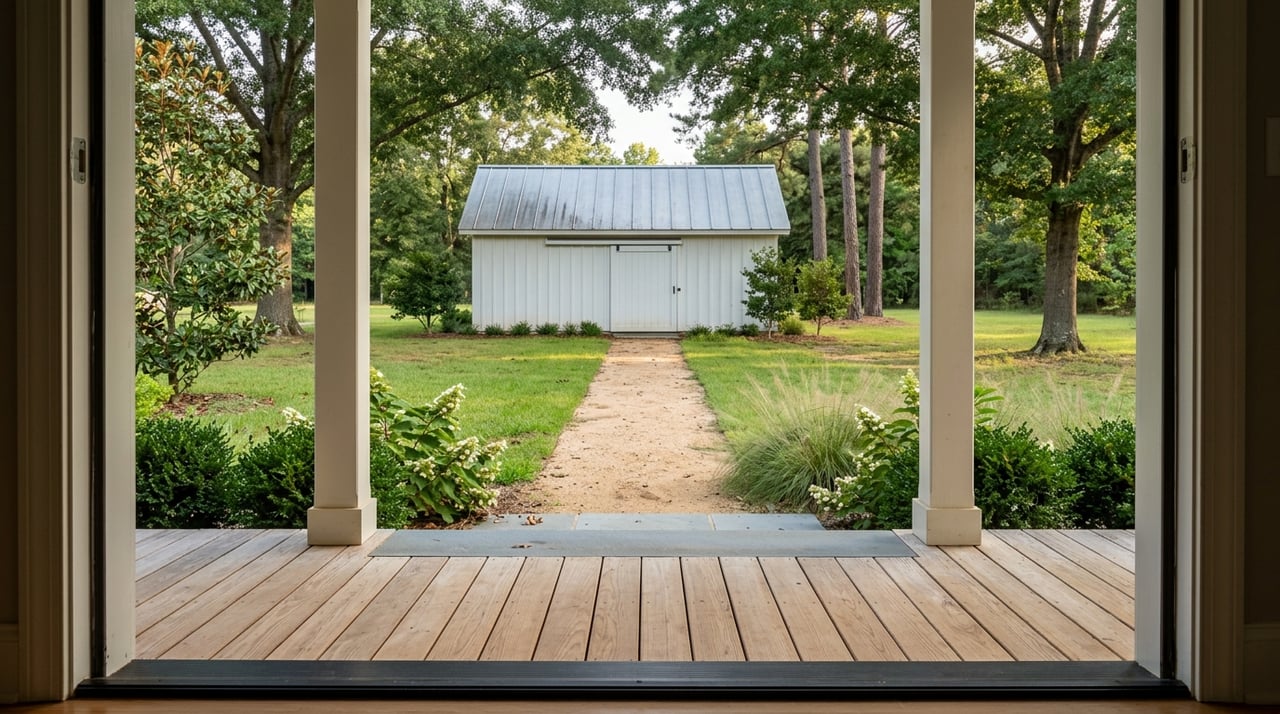
Are you drawn to Madison’s historic streets and downtown energy, or does a few extra acres in the county sound more like home? If you are weighing an in-town Madison home against a nearby country property, you are not alone. In this market, the choice is often less about mileage and more about lifestyle, utilities, property rules, and long-term fit. Let’s dive in.
In-Town Madison vs Country Living
Choosing between in-town Madison and nearby Morgan County acreage usually comes down to how you want to live day to day. Even when two properties are only a short drive apart, they can fall under very different systems.
In-town Madison often means closer access to the downtown square, city utilities, and city permitting. A nearby country property may offer more land, more separation from neighbors, and a rural setting shaped by county zoning and agricultural land use policies. Understanding that difference early can save you time and help you focus on the right homes.
What In-Town Madison Offers
Madison is a small county-seat city with an estimated population of 5,131 as of July 1, 2024, according to the U.S. Census Bureau. The city describes itself as centrally located in northeast Georgia, about an hour from Atlanta and 30 minutes from Athens, with Highway 441 becoming Main Street as you head into downtown.
For many buyers, that convenience is a major draw. Downtown Madison is organized around a central square, and the city highlights its mix of shopping, dining, events, and historic character as part of daily life in the community, as noted on the city’s history page.
Walkability and Convenience
If you want to be near services, offices, shops, and community events, in-town living may be the better fit. The downtown core concentrates many of those destinations in one compact area, which can make errands and outings simpler.
That convenience also tends to shape the feel of daily life. You may spend less time driving and more time enjoying the rhythm of downtown Madison.
City Utilities and Services
Another practical benefit of living in the city is access to municipal services. The City of Madison Utilities Department provides water, sewer, and natural gas service to residents and businesses within its service area.
Within city limits, the city also handles plan review, permits, inspections, and code enforcement. That can make the process more straightforward if you are buying a home and planning updates that fall under city oversight.
Historic Character and Preservation
Madison is well known for its historic setting. The Madison Historic District includes downtown and surrounding residential neighborhoods, and the city notes that the district is listed in the National Register of Historic Places.
If you love older homes, architecture, and the sense of place that comes with a preserved town center, this can be a real advantage. The city also notes that some National Register-listed properties may qualify for preservation-related tax incentive programs.
What to Know About Historic District Rules
Historic charm often comes with added oversight. In Madison’s historic district, exterior changes typically require review by the Historic Preservation Commission and a Certificate of Appropriateness.
That does not mean buying in the district is difficult. It does mean you should expect more review if you want to change visible exterior features. For some buyers, that structure helps protect the setting they value. For others, it may feel limiting.
You can learn more through the city’s historic district guidelines and preservation information and its preservation tax incentives page.
What Nearby Country Properties Offer
If your priority is land, privacy, or room for agricultural and outdoor uses, the county may be a better match. Morgan County had an estimated population of 22,095 as of July 1, 2025, and its planning framework emphasizes rural character, open space, farmland, and low-density development.
According to Morgan County planning materials, county zoning is intended to protect natural resources, prevent overcrowding, and support public needs tied to transportation, utilities, parks, and other services.
Larger Lots and Rural Character
County materials describe rural character as an environment where open space and the natural landscape predominate and urban services generally are not required. That helps explain why country properties around Madison appeal to buyers who want breathing room and a more land-focused lifestyle.
The county also distinguishes between agricultural and agricultural-residential settings. In county staff materials, AG zoning is described as open farmland intended to preserve rural character, while AR zoning supports low-density rural single-family use. Those same materials note minimum lot sizes of 5 acres in AG and 2 acres in AR.
A Real Farm and Acreage Market
In Morgan County, acreage is not just a niche product. The 2022 USDA Census of Agriculture county profile reports 537 farms and 97,901 acres in farms, with an average farm size of 182 acres.
The county’s agricultural identity also shows up in public facilities and events. Morgan County says its Agricultural Center hosts horse, dairy heifer, beef, sheep, and goat shows, along with lamb sales, equipment auctions, and other agricultural events.
Country Property Trade-Offs
More land often means more homework. Outside Madison city limits, Morgan County handles planning and zoning matters, and property-specific questions can have a bigger impact on cost and usability.
For example, you may need to verify utility access, wastewater setup, floodplain considerations, and permitted uses for barns, fences, or outbuildings. Morgan County’s Planning and Zoning Department oversees many of those issues, and onsite sewage systems are regulated through state health requirements and permits.
In other words, country living can offer flexibility and space, but it usually requires more due diligence before you buy.
Why Madison Mailing Address Can Mislead
One of the most important details in this market is also one of the easiest to miss. A Madison mailing address does not automatically mean a property is inside Madison city limits.
That matters because city limits help determine whether city utilities, city permitting, and historic district rules apply. The city specifically advises buyers to confirm jurisdiction before assuming city services or regulations cover a property, as noted on its building permits page.
Comparing Lifestyle and Ownership
Here is a simple way to think about the choice:
| Feature | In-Town Madison | Nearby Country Property |
|---|---|---|
| Setting | Historic downtown and surrounding residential areas | Rural landscapes, open space, farmland, low-density areas |
| Utilities | Often city water, sewer, and natural gas | May require verification of utility and wastewater systems |
| Oversight | City permitting and possible historic district review | County zoning, land-use, and site-specific review |
| Lot size | Typically smaller than rural acreage | Often larger lots, with some zoning tied to 2-acre or 5-acre minimums |
| Buyer appeal | Convenience, downtown access, historic character | Land, privacy, outbuildings, hobby-farm potential |
Neither option is automatically better. The right choice depends on whether you value convenience and historic setting more, or land and rural flexibility more.
What the Market Snapshot Suggests
Recent market numbers show that city and county properties can move differently. According to a February 2026 market snapshot, Madison’s median sale price was $410,000 with median days on market of 186, while Morgan County’s median sale price was $419,900 with median days on market of 100.
That snapshot also showed a lower countywide price per square foot than Madison, which may suggest that land and lot value play a larger role outside town. Still, those numbers do not prove one location always resells better than the other.
A more useful takeaway is that the buyer pool is different. In-town homes may attract buyers focused on convenience and historic setting, while country properties may appeal more to buyers seeking privacy, acreage, or agricultural use potential.
Questions to Ask Before You Buy
Whether you prefer downtown Madison or the countryside nearby, a few early questions can help you avoid surprises:
- Is the property inside Madison city limits or only using a Madison mailing address?
- Is the home inside the Madison Historic District?
- What zoning applies to the property?
- Does the property have city water and sewer, or an onsite system?
- What permits or approvals would be needed for renovations or additions?
- Are barns, fences, or other outbuildings allowed?
These questions shape both your day-to-day ownership experience and your future resale options.
How to Choose the Right Fit
If you picture yourself near the square, enjoying a historic setting and easier access to services, in-town Madison may feel like home. If you want room to spread out, more land, and a rural setting shaped by open space and agriculture, a country property may be the better path.
The key is to match the property to your real priorities, not just the address on the listing. When you understand the difference between city systems and county systems, you can buy with more confidence.
If you are comparing homes in Madison and across Morgan County, working with a local team can make the decision much clearer. Rhonda Smith and her team can help you evaluate city limits, historic district factors, property use questions, and the day-to-day lifestyle trade-offs so you can find the right fit for how you want to live.
FAQs
What is the main difference between in-town Madison and nearby country properties?
- The biggest difference is usually the system that governs the property: in-town Madison often means city utilities, city permits, and possible historic district review, while nearby country properties are more likely to fall under county zoning, rural land-use rules, and site-specific utility or wastewater considerations.
Are all Madison address homes inside Madison city limits?
- No. The City of Madison states that a Madison mailing address does not automatically mean the property is inside city limits, so you should verify jurisdiction before assuming city services or rules apply.
What should buyers know about the Madison Historic District?
- Buyers should know that the Madison Historic District includes downtown and surrounding residential neighborhoods, and exterior changes within the district generally require review and a Certificate of Appropriateness.
Are rural properties in Morgan County usually larger lots?
- Often, yes. County materials describe agricultural and agricultural-residential areas as low-density rural settings, and cited county staff materials note minimum lot sizes of 5 acres in AG zoning and 2 acres in AR zoning.
Is in-town Madison or rural Morgan County better for resale?
- There is no single answer. The research suggests the buyer pool differs by property type, with in-town homes often appealing to buyers seeking convenience and historic character, and country properties attracting buyers who want land, privacy, or agricultural potential.
